
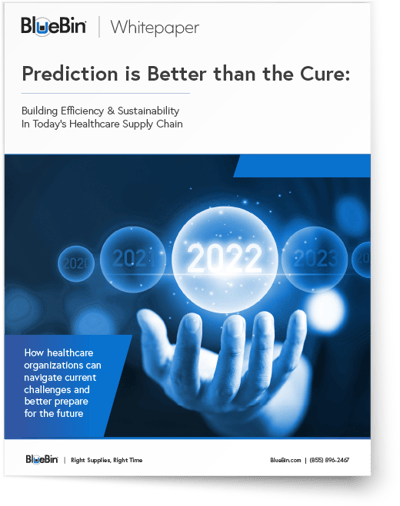
Prediction is Better than the Cure: Building Resilient Supply Chains Through Analytics

The pandemic exposed critical weaknesses in healthcare supply chains. Hospitals responded with overstocking that wastes resources and burnout-inducing manual processes. This 15-page guide shows how predictive analytics and mobile technology prevent shortages before they occur, eliminate reactive firefighting, and free clinical staff to focus on patient care.

Data trust mockup

What You'll Discover

  • Post-pandemic supply chain risks including 69% frontline burnout and overstocking waste
  • Why traditional ERPs fail to provide real-time visibility and predictive insights
  • BlueQ SmartScan capabilities for ordering, receiving, warehouse management, and analytics
  • Three opportunities created by advanced data analytics to prevent shortages and reduce costs
  • Five best practices from successful post-pandemic supply chain transformations
  • Real case study: Michigan health system saves millions annually through predictive analytics

Download Our Free Whitepaper

Prefer to discuss your specific situation first?

300+

Hospital locations served

98%

Customer retention rate

845M

Documented customer savings

69%

Frontline workers at burnout risk (Deloitte 2022)

pandemic icon

The Post-Pandemic Supply Chain Crisis Still Gripping Healthcare


The pandemic created a stress fracture in healthcare supply chains that still hasn't healed. Frontline workers faced unprecedented pressure, with 69% now at risk of burnout. The directive was simple: "Don't Run Out." The result? Widespread overstocking that wastes resources through expiration, ties up working capital, and creates labor-intensive management burdens.

This creates a destructive cycle. Lack of visibility into actual inventory creates loss of trust between supply chain and clinical teams. That loss of trust leads to less quality care as clinicians waste time hunting supplies. Overtaxed clinicians face greater patient loads, perpetuating the cycle.

Meanwhile, 86% of healthcare executives say improving supply chain is their top priority, yet traditional ERPs create barriers rather than solutions. These systems weren't designed for mobile-first healthcare environments. Data processing is time-intensive. Real analytics capabilities are nonexistent. Critical information remains locked in silos, preventing the real-time visibility needed for confident decision-making.

Over 60% of organizations reported supply delays during the pandemic. In response, 81% adjusted their inventories, with most increasing stock levels. This reactive overstocking approach addresses symptoms but not root causes.

The solution isn't more inventory. It's predictive intelligence that prevents problems before they occur.

What's Inside: 15 Pages of Predictive Supply Chain Strategies


This guide provides hospital leaders with comprehensive frameworks to transform reactive supply chains into predictive, resilient operations through advanced analytics, mobile technology, and proven best practices.

Section 1: The Risks on the Horizon Understand the pandemic's lasting impact on healthcare supply chains and workforce sustainability. Examine how 69% of frontline workers now face burnout risk due to supply chain inefficiencies. Learn how the "Don't Run Out" directive created widespread overstocking that wastes resources through expiration. Identify the destructive cycle where lack of visibility creates loss of trust, leading to compromised care quality, overtaxed clinicians, and greater patient loads. Recognize how employee burnout and recruitment challenges compound supply chain problems.

Section 2: The Barriers to Supply Chain Success Discover why 86% of healthcare executives prioritize supply chain improvement yet struggle to achieve results. Understand traditional ERP limitations including lack of mobile-first design, time-intensive data processing, and absence of real analytics capabilities. Learn how data locked in silos prevents the system-wide visibility needed for confident decision-making. Recognize the gap between available data and actionable insights that traditional systems cannot bridge.

Section 3: BlueQ SmartScan - Advanced Mobile Technology Explore how BlueQ SmartScan overcomes ERP limitations through comprehensive mobile functionality. Discover ordering, receiving, warehouse, and procedural capabilities consolidated in a single advanced handheld device. Learn how the all-in-one dashboard provides system-wide visibility and better inventory management. Understand compatibility with both Kanban and traditional par cart processes. Explore Daily Management System features including Gemba Audit tools, QCN Clinical Requests Portal, and real-time Huddle Boards that drive continuous improvement.

Section 4: The Opportunities Created by Advanced Data Analytics Identify three critical benefits that predictive analytics delivers. First, predictive forecasting prevents shortages before they occur by analyzing historical patterns, seasonal trends, and external factors. Second, increased visibility creates better supply chain resilience and streamlined replenishment across the entire organization. Third, improved cost management reduces waste from overstocking while eliminating emergency purchasing premiums. Understand how to leverage existing ERP data with the right supporting technology to transform reactive processes into predictive intelligence.

Section 5: Best Practices for Post-Pandemic Supply Chain Management Learn from a real transformation at one of Michigan's largest healthcare systems. Discover five proven best practices that delivered hundreds of labor hours saved monthly and millions in annual savings. Start with a clean slate through 5S events and proper asset tagging. Make processes easier for staff through clear role definition and intelligent automation. Establish reliable inventory by managing lead times and automating stock ordering. Track healthcare trends through demand forecasting that anticipates rather than reacts. Analyze KPIs systematically to identify optimization opportunities and measure continuous improvement.

Section 6: The Path Forward Understand that the data needed for predictive supply chains already exists in hospital ERPs. The missing piece is supporting technology that transforms raw data into actionable intelligence. Recognize that predictive analytics is the only long-term solution to prevent the next supply chain crisis. Learn how combining mobile technology, advanced analytics, and proven methodologies creates sustainable resilience.

Real Results: Transforming Michigan's Largest Healthcare System


One of the largest healthcare systems in Michigan was under pressure to reduce inventory expenditure and increase supply chain efficiency. Spanning several hospital sites and continuing to grow, supply management decisions were having a huge impact on overall performance.

A lack of visibility into available inventory meant the healthcare provider was overspending on supplies. This contributed to overstocking, leading to wasted inventory when it wasn't used before expiration. But that wasn't the only problem. The incumbent inventory management system was also hugely labor-intensive, wasting clinician time and contributing to negative satisfaction scores.

After implementing BlueBin's technology across the entire healthcare system, immediate benefits were realized:

  • Hundreds of labor hours saved per month through more efficient inventory management
  • Significant uptick in clinician satisfaction as staff spent less time on supply tasks
  • Millions of dollars in annual savings through reduced supply expenses
  • Real-time supply chain decisions based on actionable insights and better forward planning
  • Eliminated unnecessary stock while using trends data to mitigate risk of stock-out and inventory expiration

BlueBin's advanced data analytics enabled the healthcare provider to make real-time supply chain decisions based on actionable insights, resulting in better forward planning. By having a clearer picture of inventory demand, they could remove unnecessary stock while using trends data to mitigate the risk of stock-out or inventory expiration across each location.

Altogether, this reduced supply expenses dramatically, streamlining supply chain operations and saving the healthcare provider millions of dollars annually.

How BlueBin Delivers Predictive Supply Chain Intelligence

Reading the guide provides the strategic framework. Partnering with BlueBin provides the proven technology and expertise that ensures successful implementation.

Risks on the Horizon

Transform supply chain operations with advanced mobile technology that consolidates ordering, receiving, warehouse management, and procedural functions in a single device. Access real-time data, proof of delivery, cycle counting, and barcode scanning capabilities. Integrate seamlessly with Daily Management System tools including Gemba Audits, Clinical Requests Portal, and Huddle Boards for continuous improvement.

BlueQ Analytics

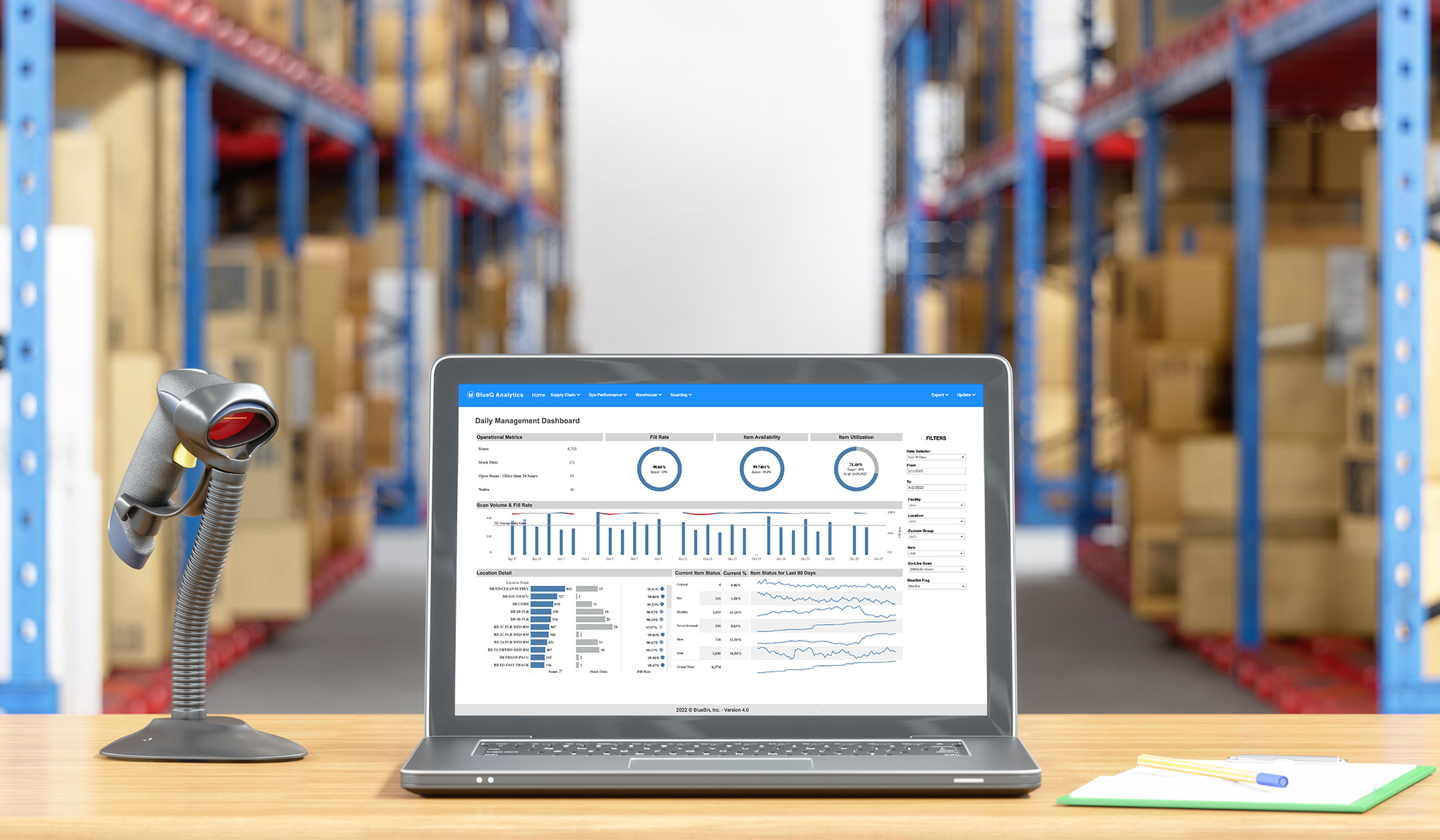
Gain predictive intelligence that prevents shortages 5-7 weeks in advance through advanced forecasting algorithms. Access comprehensive visibility across spend, volume, PAR management, stock rotation, and labor productivity. Leverage predictive reports for out-of-stock and surplus conditions. Make data-driven decisions from multiple devices with real-time dashboards that turn raw ERP data into actionable insights.

Post-Pandemic Transformation Consulting

Leverage BlueBin's expertise implementing resilient supply chains across 300+ hospital locations. Our team provides 5S event facilitation, demand forecasting strategy development, KPI framework implementation, and ongoing performance monitoring to ensure your transformation delivers measurable results and sustainable resilience.
Frequently Asked Questions


The pandemic created a stress fracture in healthcare supply chains that exposed critical vulnerabilities. The directive was simple: "Don't Run Out." Hospitals responded with widespread overstocking to prevent shortages, but this reactive approach created new problems. Wasted resources from expiration, tied-up working capital, and labor-intensive manual management increased burden on already stressed clinical teams. The result is 69% of frontline workers now face burnout risk, partly driven by time wasted on supply tasks rather than patient care. While 86% of healthcare executives say improving supply chain is their top priority, traditional ERPs lack the mobile-first design, real-time analytics, and predictive capabilities needed to transform reactive firefighting into proactive planning. Over 60% of organizations reported supply delays during the pandemic, and 81% responded by increasing inventory levels rather than implementing predictive intelligence. We haven't recovered because most organizations are still using the same reactive approaches with slightly higher inventory buffers rather than addressing root causes through predictive analytics.

Traditional ERPs create five critical barriers to supply chain excellence. First, they lack mobile-first design, forcing staff to return to desktop terminals rather than managing inventory at the point of use. Second, data processing is time-intensive with batch updates instead of real-time visibility, meaning decisions are made on stale information. Third, real analytics capabilities are nonexistent; ERPs collect data but don't transform it into actionable insights or predictive intelligence. Fourth, critical information remains locked in silos across purchasing, inventory, clinical systems, and finance, preventing the system-wide visibility needed for confident decision-making. Fifth, these systems require extensive customization and workarounds to handle basic supply chain workflows like proof of delivery, cycle counting, or supplier returns. The gap between available data and actionable insights is where supply chain failures occur. ERPs tell you what happened yesterday, but healthcare needs to know what will happen tomorrow.

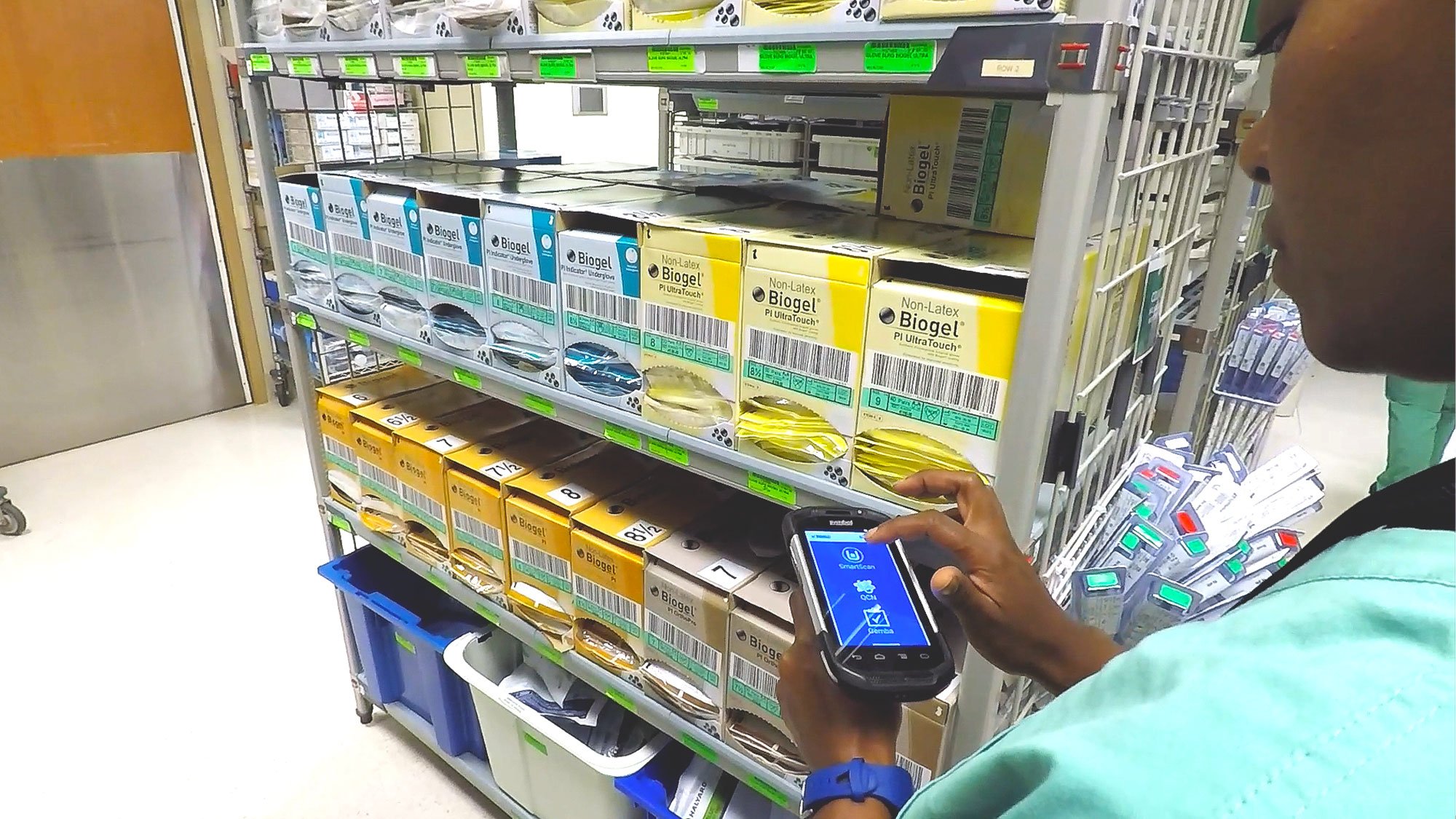
BlueQ SmartScan is an advanced handheld device that consolidates ordering, receiving, warehouse management, and procedural functions that traditionally require multiple systems or extensive desktop ERP navigation. The platform provides comprehensive mobile functionality with route control, proof of delivery, cycle counting, and barcode scanning in a single device. The all-in-one dashboard delivers system-wide visibility and real-time inventory tracking, eliminating the information silos that plague traditional ERPs. SmartScan works with both Kanban and traditional par cart processes, providing flexibility rather than forcing process changes. The platform integrates with Daily Management System features including Gemba Audit tools for supply room evaluations, QCN Clinical Requests Portal for clinical team communication, and real-time Huddle Boards that surface issues immediately rather than waiting for weekly reports. BlueQ SmartScan transforms raw ERP data into actionable intelligence accessible exactly when and where supply chain staff need it. This mobile-first approach reduces time spent on administrative tasks, improves accuracy, and enables the labor savings equivalent to 7-8 FTEs through optimized workflows.

Advanced data analytics creates three critical benefits that transform reactive supply chains into predictive operations. First, predictive forecasting prevents shortages before they occur by analyzing historical usage patterns, seasonal trends, external supply chain signals, and clinical demand drivers to forecast needs 5-7 weeks in advance rather than reacting to stockouts. This eliminates emergency purchasing premiums and case cancellations from missing supplies. Second, increased visibility creates better supply chain resilience and streamlined replenishment by providing real-time insights across all inventory locations, enabling coordinated decision-making that prevents both shortages and overstocking. This system-wide visibility rebuilds trust between supply chain and clinical teams. Third, improved cost management reduces waste from overstocking while eliminating the labor burden of managing excess inventory and expired products. Organizations can right-size inventory based on actual consumption patterns rather than fear-based overstocking. During the pandemic, 60% of organizations reported supply delays and 81% responded by increasing inventory; predictive analytics would have enabled more surgical responses targeting actual vulnerabilities rather than blanket increases.

Five proven practices deliver sustainable resilience based on successful transformations like the Michigan healthcare system case study. First, start with a clean slate through comprehensive 5S events that remove expired products, consolidate duplicates, and establish proper asset tagging for accurate tracking. This creates the reliable baseline data that predictive analytics require. Second, make processes easier for staff through clear role definition, intelligent automation that eliminates manual data entry, and workflows designed around clinical needs rather than administrative convenience. Third, establish reliable inventory by actively managing lead times, implementing automated stock ordering based on consumption patterns rather than manual par checks, and building appropriate buffers for critical items. Fourth, track healthcare trends through demand forecasting that considers seasonal patterns, census fluctuations, procedural volume changes, and external supply chain signals to anticipate rather than react to changes. Fifth, analyze KPIs systematically including fill rates, inventory turns, stockout frequency, expiration rates, and labor productivity to identify optimization opportunities and measure continuous improvement. These practices delivered hundreds of labor hours saved monthly and millions in annual savings for the Michigan health system by transforming reactive firefighting into predictive intelligence.

Healthcare consumption patterns are more predictable than they appear when you analyze the right data. Start by segmenting inventory into categories with different demand characteristics. High-volume medical-surgical supplies show consistent daily consumption with minor seasonal variation. Procedural supplies correlate directly with surgical schedules and census data. Emergency department supplies spike during flu season, holiday weekends, and community health events. Pharmacy items follow prescription protocols and patient acuity levels. Once segmented, apply appropriate forecasting models: moving averages for stable items, seasonal decomposition for cyclical patterns, regression analysis for procedure-correlated supplies. BlueQ Analytics automatically identifies these patterns and generates forecasts 5-7 weeks in advance, flagging anomalies that might indicate supply chain disruptions or demand shifts. The key is combining historical usage data with leading indicators like surgical schedules, census trends, community health data, and external supply chain signals. This prevents both shortages and overstocking by aligning inventory with actual demand patterns rather than fear-based estimates.

The Michigan healthcare system case study demonstrates typical ROI patterns. They achieved hundreds of labor hours saved per month through more efficient inventory management, enabling supply chain staff redeployment to higher-value activities. Millions of dollars in annual savings resulted from reduced supply expenses by eliminating overstocking waste, expiration losses, and emergency purchasing premiums. Clinician satisfaction improved significantly as staff spent less time hunting supplies and more time on patient care. These outcomes typically manifest within the first 6-12 months of implementation. Additional benefits include prevented case cancellations from stockouts, improved compliance with regulatory lot tracking requirements, better working capital management through optimized inventory levels, and increased supply chain resilience that prevents crisis-mode firefighting. The ROI framework includes recurring supply expense savings of 5-7% annually, one-time inventory reduction releasing 15-25% of working capital, labor efficiency gains equivalent to 7-8 FTEs repurposed, and clinical time reclamation worth 50% reduction in supply hunt time. Most organizations achieve cash payback within 6-12 months with total ROI of 7-9x over 36-60 months.

Successful implementations follow a phased approach that minimizes disruption while building capabilities progressively. Start with a comprehensive 5S event in a single department to establish clean baseline data and demonstrate quick wins. Implement BlueQ SmartScan in this pilot area, training supply chain staff on mobile workflows for ordering, receiving, and cycle counting. Begin capturing real-time data that feeds BlueQ Analytics dashboards. After 4-6 weeks, review results with stakeholders, refine processes based on lessons learned, and select the next expansion area. Gradually roll out to additional departments, building expertise and confidence across the organization. Throughout implementation, maintain existing processes in parallel until new workflows prove reliable. The Daily Management System provides structured problem-solving when issues arise rather than reverting to old habits. Most organizations complete system-wide deployment within 9-15 months, significantly faster than traditional 3-5 year lean transformations because the technology accelerates adoption and the mobile-first design reduces training burden. The key is balancing speed with sustainability, ensuring each area achieves stable performance before expanding rather than rushing deployment and risking regression.

Related Resources


BlueQ SmartScan Overview

Discover how advanced mobile technology consolidates ordering, receiving, warehouse management, and analytics in a single device.
BlueQ Analytics Platform
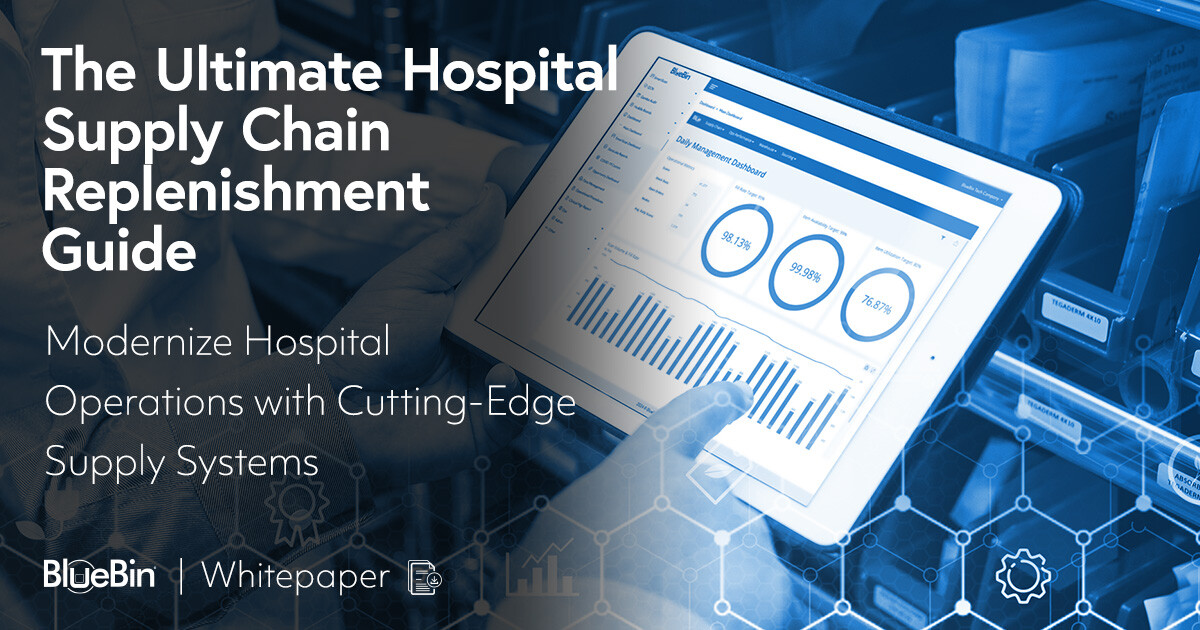
See how predictive intelligence prevents shortages 5-7 weeks in advance and transforms ERP data into actionable insights.

Hospital Supply Chain Replenishment Guide

Learn how point-of-use systems complement predictive analytics by ensuring supplies flow reliably to clinical teams.